
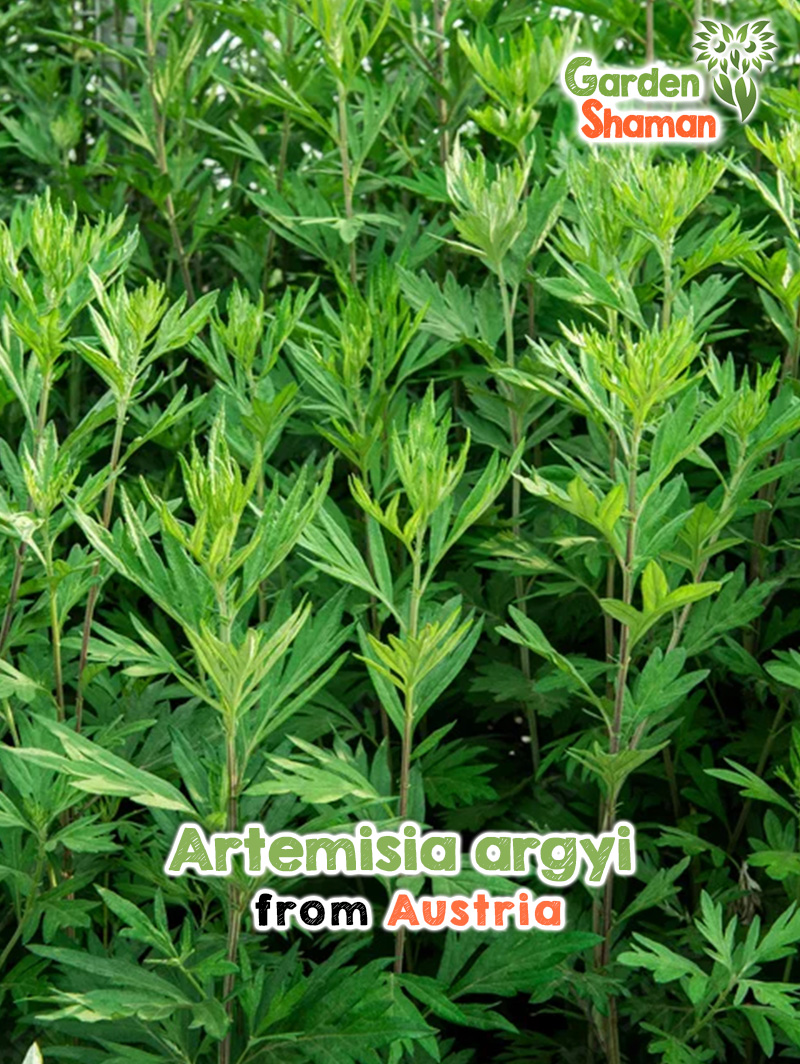
Chinese mugwort (Artemisia argyi) - seeds
$ 40.15
Description Chinese mugwort (Artemisia argyi) - seeds Seed information Origin: Austria Harvesting the seeds: 2025 Germination period: approx. 14-21 days at 18-22 °C. Each pack contains approx. 100 seeds. Larger quantities on request. Information on the species Family: Asteraceae (composite plants) Synonyms: Artemisia chiarugii, Artemisia handel-mazzettii, Artemisia nutans Occurrence: East Asia - China, Korea, Japan, Mongolia, Russian Far East Description �� Artemisia argyi, known as Chinese mugwort or „Ai Cao“, is a perennial, aromatic plant with silvery-grey, finely hairy foliage. It has been cultivated for centuries in East Asia for ritual, culinary and herbal purposes. With its dense, bushy growth and characteristic, spicy-bitter fragrance, it is an enrichment for herb gardens, scented borders and ethnobotanical collections. �� Sowing instructions �� Sowing time: March-May or August-September. Germination period: 14-21 days at 18-22 °C. Seeding depth: Light germinators - press seeds only lightly, do not cover. Substrate: Well-drained, sandy-humus herb soil. Location: Sunny to semi-shady, prefers warm, dry locations. Pouring: Evenly moist, but never wet. Planting distance: 25-35 cm. �� Note: Protect young plants slightly from frost in the first season. Use & meaning �� In East Asia Artemisia argyi as a symbolic plant for purification, health and protection. Its dried leaves have been used for centuries to make „moxa“ - a medicinal plant mass that is ignited in traditional Chinese moxibustion to stimulate heat points on the body. The plant also plays a role in Japanese and Korean incense traditions: its aromatic smoke is said to cleanse rooms energetically. In China, Ai Cao is hung over front doors during the Dragon Boat Festival (Duanwu) to ward off bad luck and illness. In culinary terms, young leaves are used in spring cakes, soups and herb rice balls. In cosmetics production, the leaves serve as a natural source of essential oils, which have antiseptic and nourishing properties. Scientifically proven ingredients include cineole, thujone, flavonoids and phenolic acids, which are responsible for the typical fragrance and intense aroma. ��✨ Tips & tricks for hobby gardeners �� Prefers dry, well-drained locations - ideal for rock gardens or herb beds. Pruning after flowering stimulates new shoots. Divide older plants every 3-4 years to promote vitality. Very resistant to drought and insect damage. Also suitable for pot cultivation if sufficient space is available. Worth knowing �� Artemisia argyi was already mentioned in the Chinese Materia Medica in the 2nd century BC. In the Han dynasty, it was considered one of the „plants of life“ and was burned in rituals at the turn of summer. Its Latin generic name „Artemisia“ goes back to the Greek goddess Artemis - protector of nature and women. Today, the plant is making a comeback in natural cosmetics and sustainable perfume production, as it is both aromatic and ecologically valuable. It also makes an important contribution to the garden as a bee and butterfly plant. It combines symbolism, history and biodiversity in one - a piece of living cultural history from East Asia. ���� �� Free seeds with every order! ℹ️ Important note Despite careful checks (germination capacity, storage, freshness), we cannot guarantee germination - too many external factors play a role in cultivation. Please inform yourself before purchase about the laws and import regulations applicable in your country. Where permitted, our seeds are intended exclusively for plant propagation. You can find further information in our terms and conditions or directly by e-mail: [email protected] ��
Related products
-
PT Cruiser FirePower Ignition Kit
Read More This product has multiple variants. The options may be chosen on the product page -
Ford Explorer 5.0 Firepower Ignition Kit, 1995-2001
Read More This product has multiple variants. The options may be chosen on the product page -
Chevy 4.3 Firepower Ignition Kit
Read More This product has multiple variants. The options may be chosen on the product page -
Jeep 5.2/5.9 Liter Firepower Kit (1993-1999)
Read More This product has multiple variants. The options may be chosen on the product page